What does HbA1c measure?
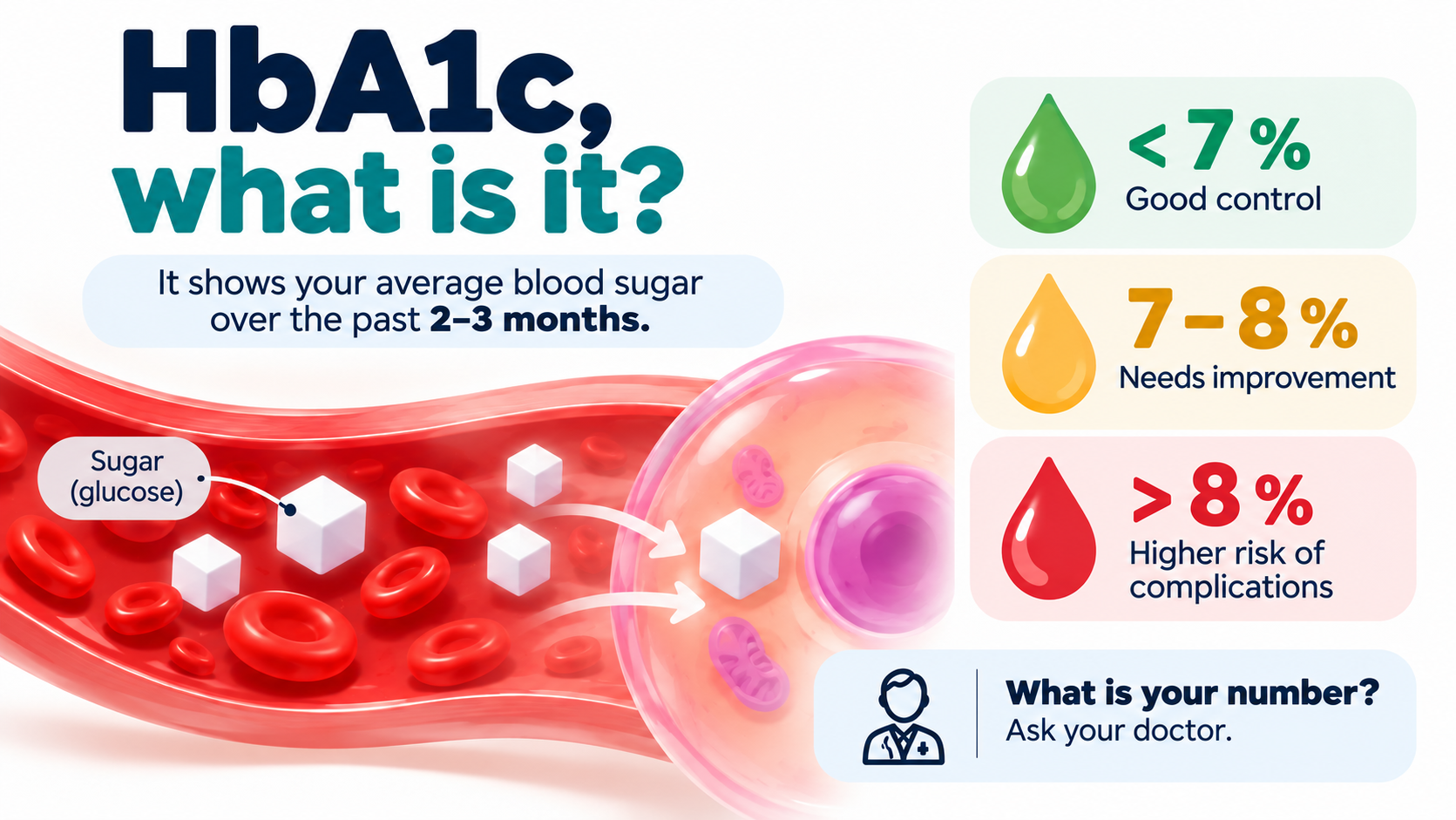
Some glucose attaches to haemoglobin, the oxygen-carrying protein in red blood cells. HbA1c measures the proportion affected, reflecting average blood sugar over about 2–3 months. Fasting is not needed for HbA1c alone.
Screening and treatment use different reference points
For adults who are not pregnant, common screening ranges are:
- < 5.7 % — below the increased-risk range
- 5.7–6.4 % — increased diabetes risk / prediabetes
- ≥ 6.5 % — diabetes diagnostic range; confirmation is usually needed
If you already have diabetes, discuss your own treatment goal. Age, other conditions and the risk of low blood sugar matter. Higher long-term blood sugar increases complication risk; there is no sudden risk boundary at 8%.
Anaemia, some haemoglobin variants, transfusions and conditions affecting red blood cells can make HbA1c misleading. Tell your clinician if it does not match your glucose readings.
Know your number. Ask about your goal.
Ask: What is my target? How has my result changed? What can we adjust, and when should we repeat the test? Agree on realistic food, activity and medication steps with your clinician. Do not change treatment based on this infographic alone.
Sources & context
Checked 3 November 2026. General adult education, not an individual diagnosis. Pregnancy and some medical conditions need different interpretation.